China Publishes First Photos of Rare Interstellar Comet 3I/ATLAS Before NASA

China’s Space Agency Beats NASA in Sharing First Photos of Comet 3I/ATLAS
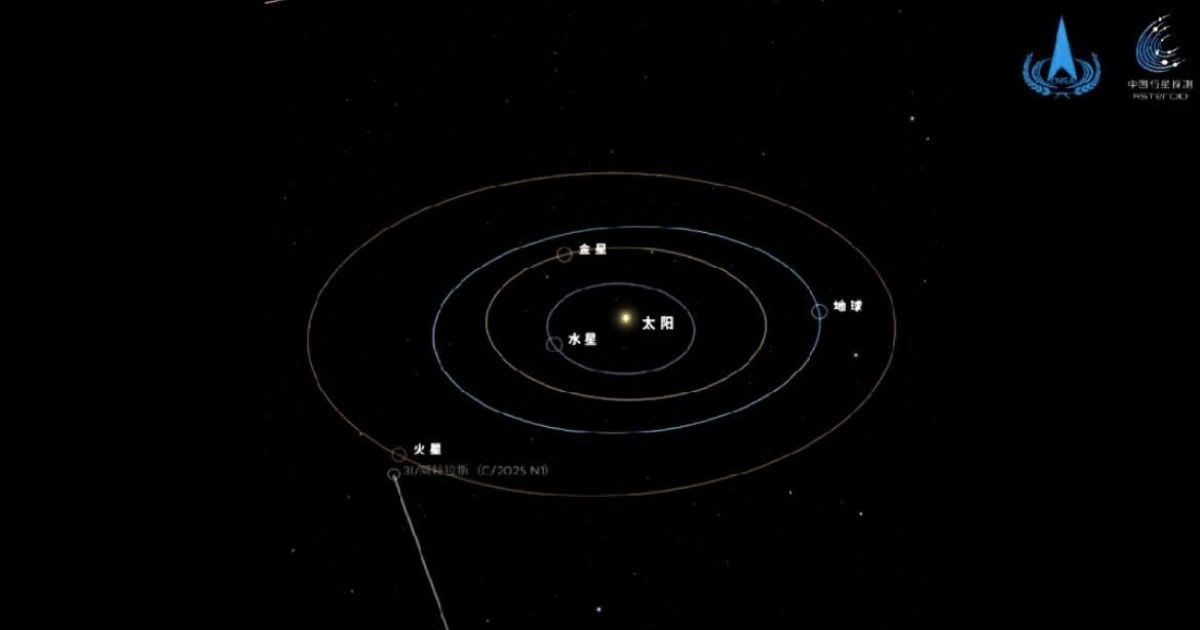
As we all know, the rare interstellar comet 3I/ATLAS swept behind the Sun, obstructing its view from the Earth. Well, the China National Space Administration (CNSA) announced in a press release that it photographed an image of the comet as it approached Mars. The comet passed within about 18 million miles of Mars on October 3, when the CNSA and NASA's Mars Reconnaissance Orbiter (MRO) captured it. While NASA's high-resolution images haven't come out yet, given the ongoing government shutdown, China has released the first images of the strange comet to the world. Let's find out more.
Comet Captured from Mars Orbit
In the press release, the CNSA released the Tianwen-1 orbiter photos depicting the comet's bright nucleus, which was shrouded by a vast coma that stretched between 3,100 and 6,200 miles. The images were captured through the orbiter's High-Resolution Imaging Camera (HiRIC), which has been circling Mars since February 2021. The CNSA said in a statement that the data from the camera was received, processed, and displayed using a ground-based application system, with the images showing the comet's distinct features. The organisation noted, "This is the first attempt to photograph such a distant and relatively faint target (10,000 to 100,000 times darker than a target on the surface of Mars)."
Tianwen-1 Mission Success
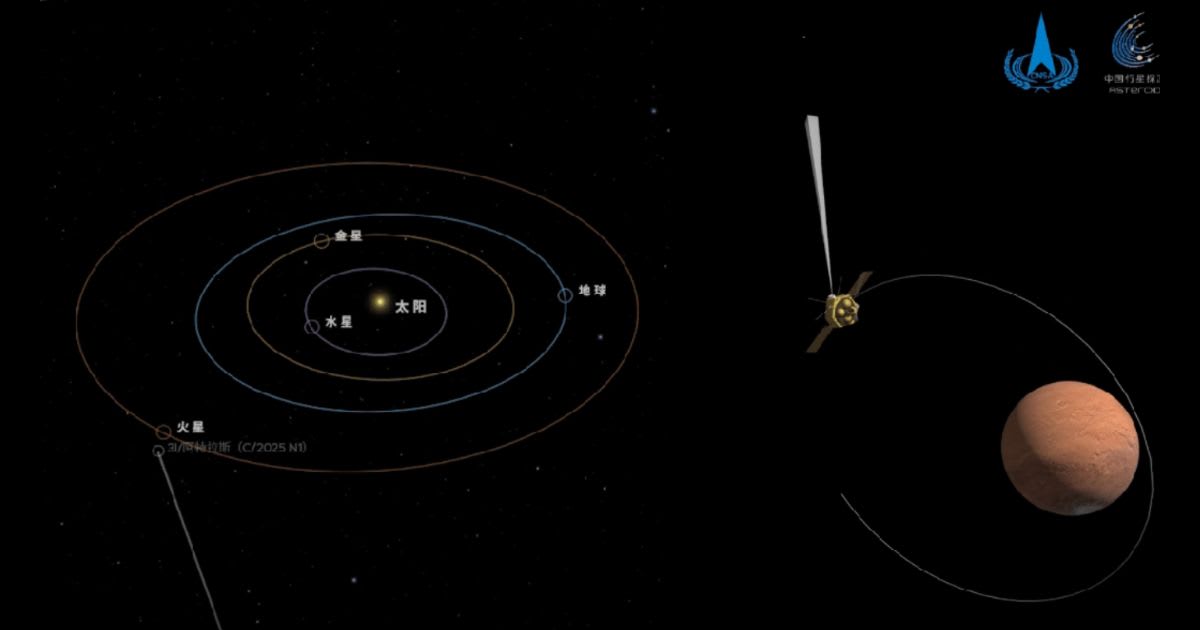
The experts at CNSA have created an animated video that consists of several 30-second images showing the comet's trajectory, which will also be used in further in-depth analyses of ATLAS. The work conducted through Tianwen-1 was successful and important for Tianwen-2's asteroid exploration, as it helped observe the faint celestial bodies in space. The CNSA said, "Through the collaborative research of the Tianwen-1 team, combined with the orbital characteristics, brightness characteristics, geometric dimensions, and scientific payload technical capabilities of the orbiter, the feasibility assessment of the observation mission." They confirmed that Tianwen-1 is in good condition and has been performing well for 4 years and 8 months to date.
NASA's Images On Hold

NASA's camera has a 19.7-inch aperture, which can capture clearer images of the comet compared to China's Tianwen-1's 15.2-inch HiRIC. Although NASA's MRO also captured the photos of the 3I/ATLAS with the help of its HiRISE camera, the images could not be released due to the longest federal government shutdown since October 1. Speaking about NASA's release of the images, Rep. Anna Paulina Luna (R-Florida) posted on X, saying, "Just had a good conversation with @NASA regarding 3I/ATLAS. As soon as the government reopens, they’ll be releasing images/data. Unfortunately, due to bureaucratic reasons, they cannot until then."
Clearer Photos Awaited
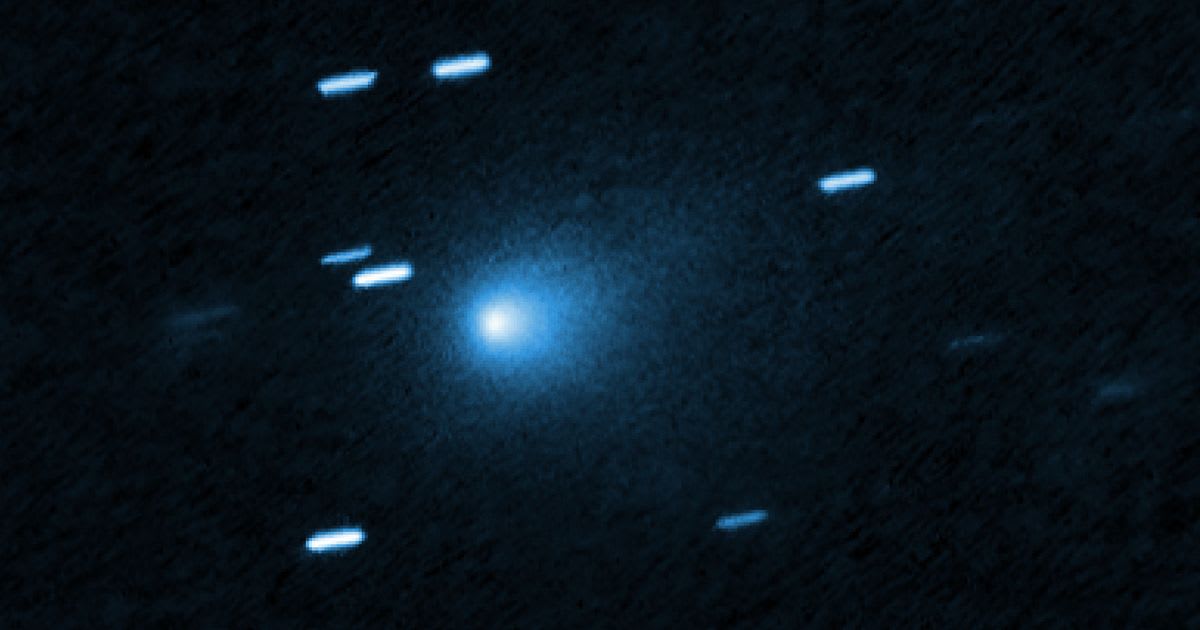
Harvard Scientist Dr. Avi Loeb has also asked NASA to release the images. He wrote in a blog post, "On October 3, 2025, the interstellar object 3I/ATLAS came within 29 million kilometers of Mars. The highest resolution images of 3I/ATLAS were obtained by the HiRISE camera onboard NASA’s Mars Reconnaissance Orbiter. This camera with a 50-centimeter aperture reached a spatial resolution of 30 kilometers per pixel, about 3 times better than the Hubble Space Telescope image from July 21, 2025." While the world awaits comet 3I/ATLAS's return to visibility from Earth, astronomers are hoping that NASA will release better images from its HiRISE soon.