Experts Discover Atlantis-Like 'Sunken City' With Medieval Buildings in Kyrgyzstan Lake

Ancient Atlantis-Like City Found Under Lake in Kyrgyzstan
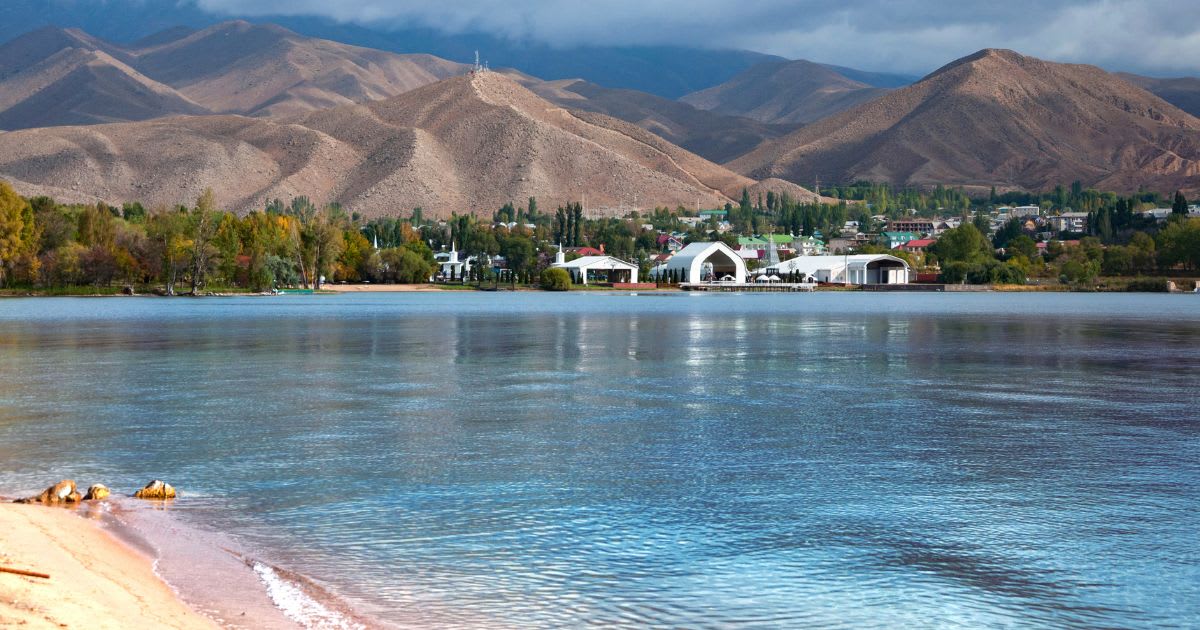
Archeologists have discovered a submerged Atlantis-like city in eastern Kyrgyzstan. In a recent underwater expedition, archaeologists were able to explore Lake Issyk-Kul in eastern Kyrgyzstan, where they discovered the traces of a submerged civilization. Lake Issyk-Kul is the eighth deepest lake in the world, with a depth of 2,192 feet. However, the experts discovered the remains of the old city at a much shallower level. The remains of the structure and the artifacts that have been discovered hint that the submerged city was once an important stop along the Silk Road. It is believed that a large earthquake that occurred at the beginning of the 15th century sank the city.
Important Part of Silk Road
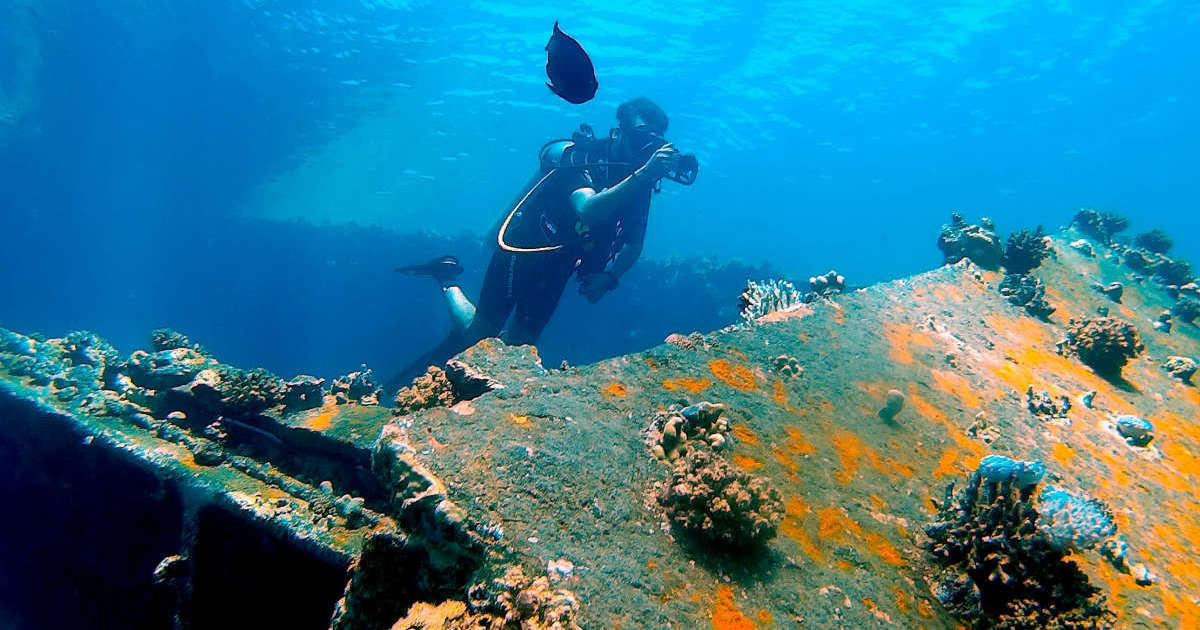
An international underwater expedition that took place in the fall of 2025 by the Russian Geographical Society (RGS), the Institute of Archeology of the Russian Academy of Sciences, along with the Institute of History, Archeology, and Ethnology of the National Academy of Sciences of the Kyrgyz Republic, explored the northwestern side of Lake Issyk-Kul. The experts aimed to study an important part of the Silk Road, the flooded Toru-Aygyr complex. During their search, the experts found a medieval burial ground, ceramic vessels, and remains of a building-like structure made of baked bricks, hinting at the presence of an ancient city, according to the Russian Geographical Society.
Islamic Burials and Buildings Found
The experts examined four sections of the lake at a depth of 3–13 feet, out of which the first location revealed structures made of baked bricks with a stone millstone. An architectural element was also found that suggested that there was a building, which was either a mosque, a bathhouse, or a madrasa. Along with this, stone structures and underwater wooden beams were also found and sent for testing to determine the age of the materials. At the second site, they found Islamic burials in an area where skeletons were facing north with their heads turned towards the direction of the Qibla (which is towards the Kaaba in Mecca). From the burial site, remains of a man and a woman were recovered.
More Discoveries Made

At the south of the main complex, the third site contained several medieval ceramics and an entire khum (vessel), which will be extracted next year. Experts believe that these materials are a part of an earlier burial ground. In the western part of the complex lies the fourth site, where experts found round rectangular structures. They aimed to collect samples of mud walls and buried soils, which can provide clues about the development of the settlement. In the study, conducted jointly with the National Academy of Sciences of Kyrgyzstan, the experts used Trionix Lab underwater drones and advanced technology of the Underwater Communications and Navigation Laboratory to observe the condition of the monument.
Expert Opinion

Speaking about the discovery, Maksim Menshikov, head of the expedition, said, "The section of the Silk Road in the Issyk-Kul Lake area was under the control of the Karakhanids. The Chinese considered this territory a zone of their interests, but they could not control it. Nevertheless, we see that this location is reflected in Chinese sources. This gives us hope to correlate historical materials with the results of our archaeological excavations. In the 13th century, under the influence of the Golden Horde, Islam became widespread in the region. Probably, the necropolis that we discovered at the bottom of the lake is connected with this period."