Moon's Surface May Not Be as Dry as We Thought — Experts Find 'Iron Rust' in Lunar Soil

Chinese Researchers Detect 'Iron Rust' on the Moon
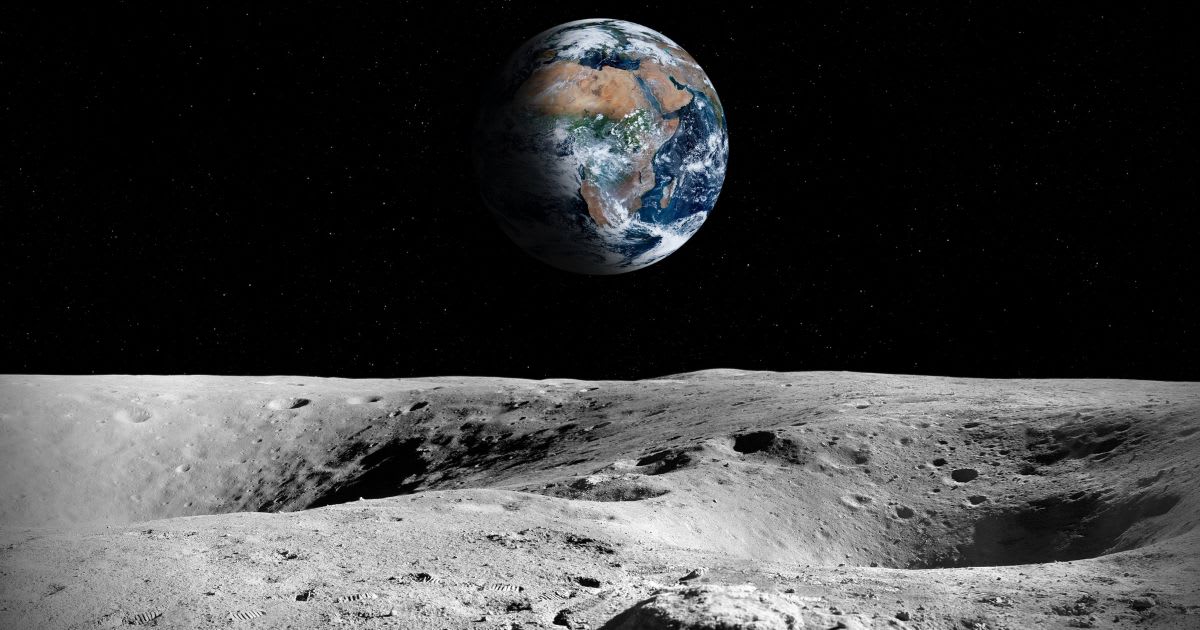
Scientists have always imagined and tried to find what life on the Moon would be like. In search of this, various countries have sent astronauts and satellites to observe the atmosphere on the Moon and to determine if it's suitable for survival. One such mission was the Chang’e-6 mission in 2024, which comprised a lander, an ascender, and a returner, collecting the first-ever samples of the far side of the moon according to the China National Space Administration (CNSA). Since then, Chinese researchers have been examining these samples to discover new information about Earth's satellite. The experts claim that the new information challenges what we know of the Moon's chemistry and surface.
Chang’e-6 Lunar Samples

The research by a team of experts from Shandong University, along with the Institute of Geochemistry of the Chinese Academy of Sciences and Yunnan University, was published in the journal Science Advances. Experts have detected micron-sized grains of crystalline Fe₂O₃ or Iron(III) oxide, a major component of rust, in lunar soil samples. The lunar soil derived from the Chang’e-6 mission from the South Pole-Aitken (SPA) Basin revealed two types of iron oxides, namely hematite (α-Fe₂O₃) and maghemite (γ-Fe₂O₃), as announced jointly by the China National Space Administration (CNSA), Shandong University, and the Chinese Academy of Sciences.
Major Impact Events
According to China Global Television Network (CGTN), the study suggests that the formation of hematite on the moon's surface is due to the occurrence of large-scale impact events in the past on the moon. These impacts can potentially produce a heterogeneous vapor environment under which oxygen-rich minerals such as troilite undergo decomposition. This process releases oxygen in the environment that interacts with iron-rich minerals in the soil, forming micrometer-scale crystalline hematite particles or iron rust. Magnetite and maghemite, formed during this reaction, are magnetic in nature and are mineral carriers of the magnetic anomalies surrounding the South Pole–Aitken (SPA) Basin situated on the far side of the moon.
Presence of Iron Oxides

This discovery challenged previous notions that stated the Moon was a dry, chemically reduced environment without iron oxides. As per the South China Morning Post (SCMP), lunar soil samples collected during the Apollo programme detected ferric iron-bearing materials such as magnetite and iron hydroxides, but a study in 1971 found the compounds to be unstable on the surface of the Moon and a product of terrestrial contamination. However, the recent discovery using remote sensing data and samples from the Chang’e-5 mission contradicts the narrative. Along with this, observations from the Moon Mineralogy Mapper since 2020 have indicated the presence of highly oxidised hematite in the high-latitude lunar environments.
Oldest Impact Basin
For experts, the successful landing, retrieval of samples, and return of the Chang'e-6 laid the pathway for the discovery. They believe that this research provides evidence that iron oxides, such as hematite, can exist within the moon's reducing environment, as well as offers insights into the moon's redox state and developing magnetic anomalies. The Chang'e-6 mission explored the SPA Basin, which is the largest and oldest known impact basin in the solar system. This particular region of the Moon is said to have experienced numerous major impacts and still retains products of these ancient impacts that can help the experts understand the geological processes on the Moon.