Scientists Discover the Main Cause Behind Massive Seaweed Surge in the Atlantic Ocean

The Surge of Seaweed

The Atlantic Ocean has faced several changes over the years due to rising global and water temperatures and rising pollution levels. It has not just changed the marine habitats but also resulted in stronger storms, melting ice, and higher sea levels. Another major change spotted in the Atlantic Ocean is the massive blankets of seaweed that have been piling up for more than a decade. A recent study conducted by researchers from the Max Planck Institute for Chemistry has now revealed the actual cause behind these massive seaweed surges and the environmental conditions that help them thrive.
The Rapid Rise

By June this year, a huge mass of Sargassum (a brown seaweed) — about 38 million tons — was seen drifting toward coastlines of the Caribbean, the Gulf of Mexico, and the northern part of South America. These seaweed blooms often release a foul smell that drives people away, as reported by SciTechDaily. This, in turn, impacts the tourism industry of the region, along with harming the local ecosystems. Additionally, the patch of Sargassum in the Atlantic is so huge that it has earned the nickname of the Great Atlantic Sargassum Belt. Shockingly, it can also be spotted from space.
Initial Explanation Behind the Algae Bloom

For many years, scientists were not sure about the origins of nitrogen and phosphorus, which are responsible for the explosive growth of Sargassum. They believed that agricultural runoff or the nutrients released by rainforest clearing were the main factors for the rise, but this explanation doesn’t fully account for the massive Sargassum surge in recent years. Therefore, researchers conducted research in this regard, and the findings were revealed in a study titled, ‘Equatorial upwelling of phosphorus drives Atlantic N2 fixation and Sargassum blooms,’ which was published in the journal Nature Geoscience.
The Actual Cause

According to the research, experts found that strong winds near the equatorial region pull deep, phosphorus-rich water up to the surface of the ocean and even carry it toward the Caribbean. This extra phosphorus is very helpful for the growth of the tiny bacteria living on Sargassum. Furthermore, these bacteria are capable of absorbing nitrogen from the atmosphere and turning it into a form that the seaweed can use, giving it an extra dose of nutrients. This process reportedly helps Sargassum grow faster in the region and may be a key reason for its rapid spread.
Corals Were Also Studied
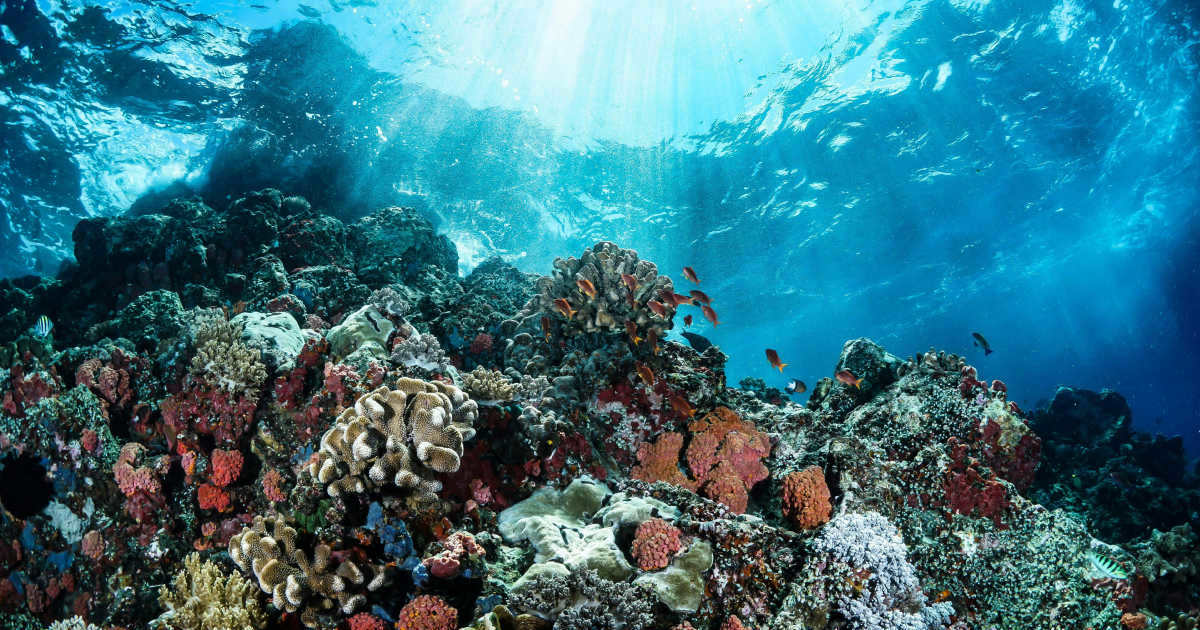
Researchers also studied coral cores from the Caribbean to learn how Sargassum blooms are related to rising nitrogen levels. By checking the nitrogen isotopes in coral layers from the past 120 years, they got an idea about when nitrogen-fixing bacteria were most active. Jonathan Jung, one of the authors of the study, said, “In the first set of measurements, we noticed two significant increases in nitrogen fixation in 2015 and 2018, two years of record Sargassum blooms. So, we compared our coral reconstruction with annual Sargassum biomass data, and the two records aligned perfectly! At that time, however, it was not at all clear whether there was a causal link.”
The Unbelievable Growth

Sargassum may look harmless, floating like golden sheets across the ocean, but its rapid growth is a worrying sign. Oceanographer Ajit Subramaniam, who has spent 25 years conducting research in the South Atlantic, first spotted the seaweed surge in 2018. As reported by The Guardian, he said, “Here was something I’d never seen before. One moment we were in the blue sea, then bam! It was all around the ship for tens, hundreds of meters.” On the other hand, Shelly-Ann Cox, chief fisheries officer for the Barbados government, also said, “Every year we’re seeing more and more countries reporting the influx, and the devastating impacts on tourism, fishery sectors and transport.”